
Why Big File Transfers Are Holding Australian Insurance Claims Back
- devkejriwal
- Dec 16, 2025
- 1 min read
Insurance claims today involve far more than simple forms. Photos, videos, inspection reports, repair estimates, medical records, and third-party documents all move between policyholders, assessors, brokers, and insurers. Yet much of this still relies on email attachments, shared links, and manual uploads. When files are too large to send or get split across platforms, claims slow down. Important documents go missing, follow-ups increase, and customers are left waiting longer than they should.
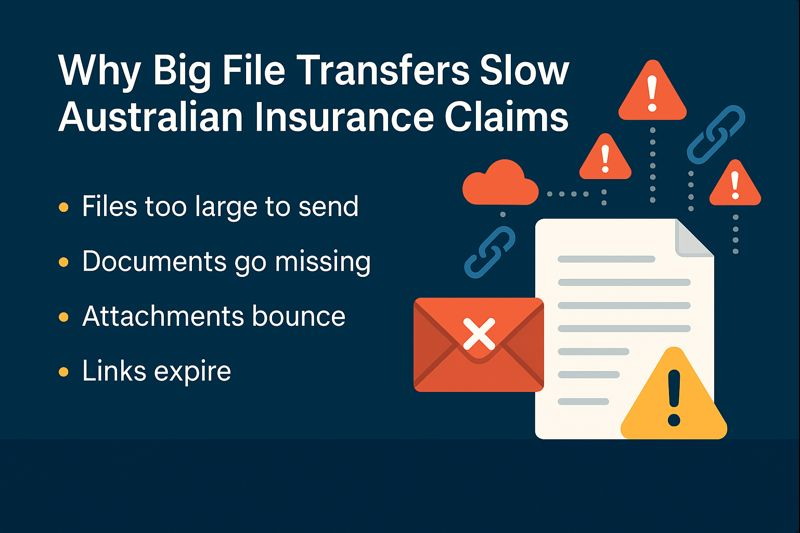
For insurers and claims teams, this creates real operational strain. Adjusters spend valuable time chasing files instead of assessing claims. Multiple versions of the same document can create confusion. Large attachments may bounce back, links may expire, and sensitive information may travel through unreliable channels. In a market where speed and transparency directly impact customer trust, inefficient file transfers quietly become one of the biggest bottlenecks in the claims process.
The future of insurance claims lies in structured digital workflows. When every claim has a dedicated space where large files can be uploaded directly, tracked clearly, and accessed only by the right stakeholders, everything moves faster.
Communication becomes smoother, turnaround times shorten, and customers feel informed rather than frustrated. Platforms like eSafeX support this shift by helping insurers manage large claim files in one organised place — reducing delays, simplifying collaboration, and keeping claims moving forward without unnecessary friction.
Big files shouldn’t slow down big decisions. Explore how eSafeX can streamline insurance claim file sharing — and help your team close claims faster.


Comments